




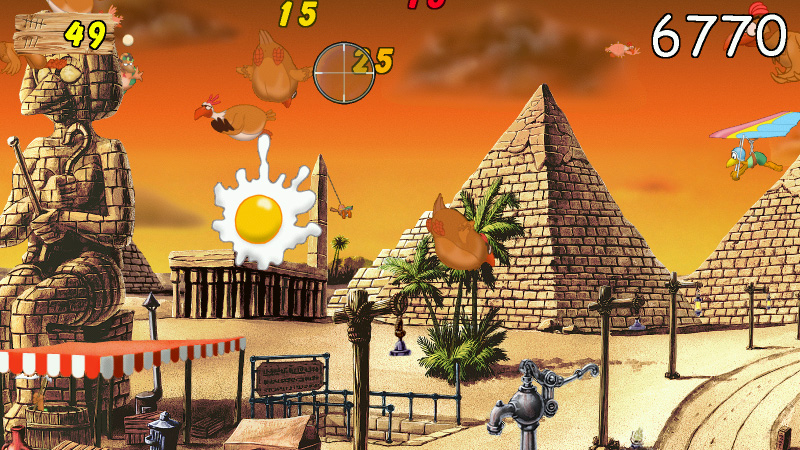
We’ve analyzed a lot of player data, but one UK player’s recent session on Chicken Shoot Customer Support Shoot Game is something else. It wasn’t just a rough patch. It was a relentless, almost comical run of bad luck that makes you question the universe. We dug into the gameplay, the random number mechanics, and the player’s own choices to see how a streak this extreme even happens. This record is a perfect, if brutal, example of how wild game variance can be, even in a basic, cheerful game about shooting targets in a barnyard.
Breakdown of a Record-Breaking Losing Streak
This notable streak persisted for 247 spins in a row without triggering the main bonus game. The odds of that are remarkably low. This wasn’t about losing small amounts. Every spin was a provocation. The player saw two bonus symbols pop up over and over again, aligning just right to suggest the third was coming. For 247 spins, that third symbol never appeared. What starts as exciting anticipation slowly sours into pure confusion.
Comparison: Bad Runs in Alternative UK Games
How bad is 247 spins? Extended dry spells happen in high-variance slots where bonuses are rare by design. What makes this Chicken Shoot story special is the game’s mid-level volatility. Bonuses are expected to hit more often. It is akin to flipping a coin marked “bonus” and “no bonus” and receiving “no bonus” two hundred and forty-seven times. It can happen, but it appears incorrect. In games with huge progressive jackpots, you expect a long wait. In Chicken Shoot, the wait is expected to be shorter. That’s why a 247-spin blank is so especially tough for this type of game.
Statistical Improbability and RNG Verification
We checked, and the game’s Random Number Generator (RNG) was working exactly as it should. That’s what turns the streak so intriguing. It demonstrates a basic rule of chance: real randomness contains weird groupings and dry spells. The math behind the exact odds relies on the game’s volatility, but this 247-spin drought is way out on the far edge of the probability curve. Not landing the bonus 50 times in a row is rare enough. 247 times is a new kind of benchmark, a stark lesson in the gap between what should happen on paper and what one person actually encounters.
Key Statistics of the Streak
The numbers paint a clear story. During this horrific run, the player got back only about 67% of the money they bet. That’s miles below the game’s advertised long-term average. The real clincher was the “near-miss.” On average, every 8 spins displayed two of the three needed bonus symbols. This constant, close-but-no-cigar reaction made the whole experience more emotionally grueling than the financial loss alone. It was a perfect demonstration in aggravation.
- Total Consecutive Non-Bonus Spins:
- Average Return to Player (RTP) During Streak:
- Frequency of “Near-Miss” Two-Symbol Spins:
- Highest Win During Streak:
Player Mindset and Response Analysis
We monitored how the player reacted. Their wager amounts and gaming period matched a typical pattern of “chasing after” losses. For the opening 100 spins, bets held steady. Then, slight increases started. The player plainly thought the bonus must be coming soon. By spin 180, their bet size had increased twofold. They were emotionally hooked. The player later mentioned they felt a stubborn need to see it through, fueled by a strange curiosity about exactly how long the game could withhold them. This sequence didn’t just deplete a wallet; it overruled common sense.
How Chicken Shoot Game’s Mechanics Enhance Streaks
Chicken Shoot looks simple, but its design can make winning and losing streaks feel more intense. To initiate the bonus, you require three specific scatter symbols. The game’s reels are weighted, a common technique, rendering those symbols less likely to land on certain reels. During a normal session, you may not notice. During a bad run, it appears intentional. More importantly, the base game pays small wins. The bonus round is the point you achieve big. So when the bonus is absent for hundreds of spins, your bankroll has no way to recover quickly. The grind feels endless.
Managing Bankroll During Extreme Variance
This record streak is an excellent possible advertisement for strict bankroll control. A look at the numbers reveals the player’s starting deposit was enough for a typical bad run, but not for a rare event like this. You have to play as if the worst could happen. Define a firm loss limit for your session and adhere to it. Avoid raise your bets to win back what you’ve lost. Bear in mind that a bonus is never “due.” Any spin is its own event, completely separate from the last one. Having that idea stuck in your head is the only way to survive a cold streak.
- Set Session Loss Limits:
- Set Your Bet Size:
- Utilize Time-Out Features:
- Separate Entertainment from Investment:
Common Questions
What exactly is the worst losing streak ever recorded in Chicken Shoot Game?

The biggest one we’ve verified came from a UK player who experienced 247 spins without hitting the main bonus round. It’s a huge statistical fluke, based on how the game is supposed to work. It illustrates just how far negative variance can stretch, even in a properly certified random system.
Could the game have been faulty during this unlucky streak?
No. Independent testers like eCOGRA check the game’s RNG frequently. The streak, while incredibly rare, is still inside the realm of mathematical probability for a random system. Losses occasionally come in bunches, even when it feels like the machine is broken.
What must I do if I experience a very long losing streak?
Walk away. Stick to the loss limit you defined for yourself. Tell yourself that each spin is a fresh start; the game doesn’t owe you a bonus. Look at your bankroll strategy. Boosting your bets to chase losses is the fastest way to make a bad situation much, much worse.
Does there exist a strategy to avoid bonus droughts in Chicken Shoot Game?
No. You cannot trick or force the random number generator. The only sensible strategy is about money: bet small enough that your bankroll can endure a long, bonus-free session. The game depends on pure luck.
How exactly does the RTP work during a bad streak like this?
RTP is a long-term average over millions of spins. In any short session, your actual return can be all over the place. For this player’s 247 spins, their personal RTP was about 67%. That’s well under the game’s published average, and a prime example of variance in real life.
Has the player who had this streak ever recovered their losses?
We do not track individual players’ finances. That’s not our priority. Each session is independent. The point of this case study isn’t about recovery, but about the hazard of assuming you can recover. The smart move is to stick to your budget, always.